Contents
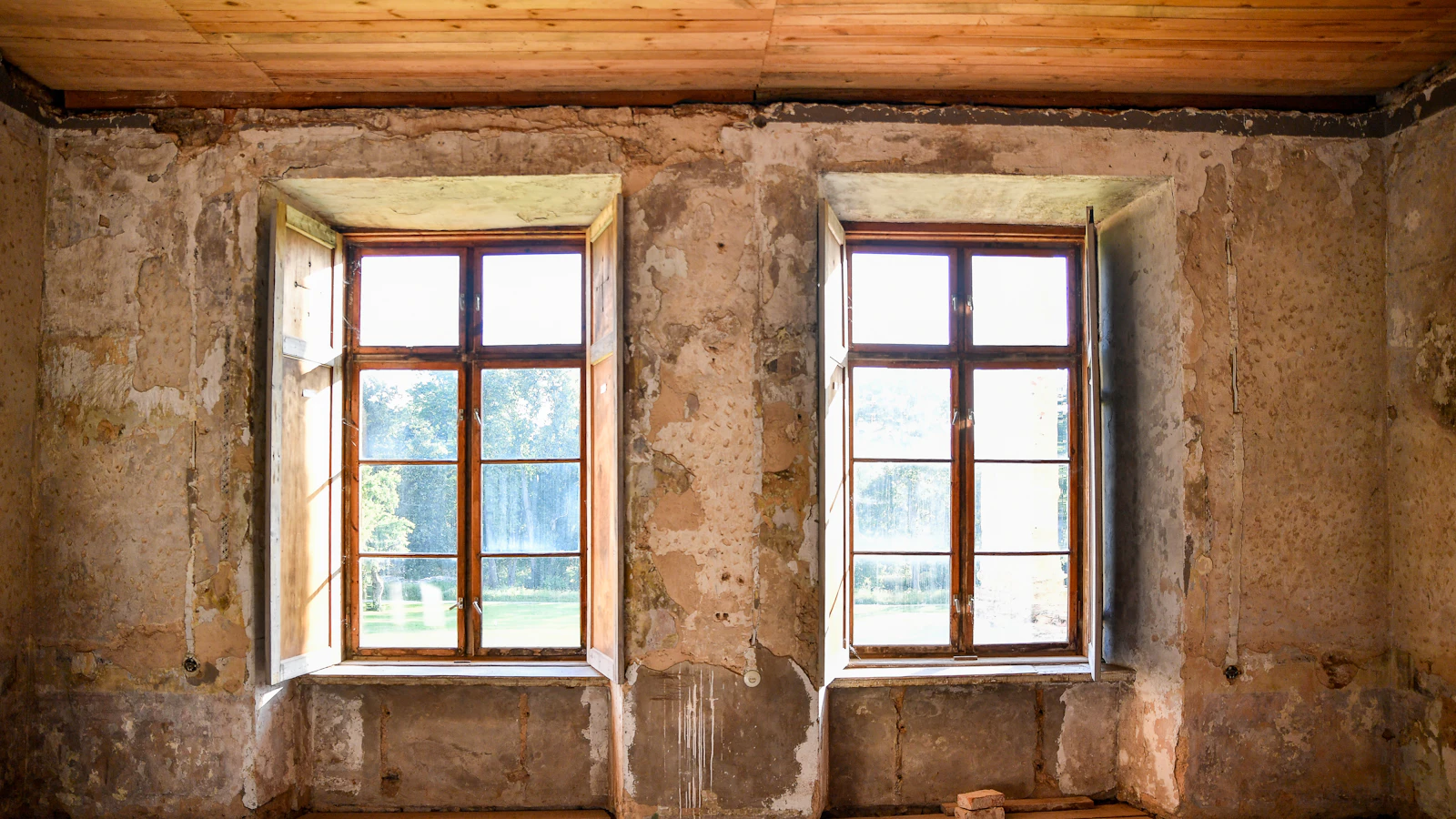
Short answer. In a pre-war building in Riga, an apartment renovation turns into a major one more often than in a newer building, because the condition depends on the floor structure, old chimneys and decades of earlier alterations. Before the estimate, check the timber floors and floor base, wiring, water and drainage, wet areas above the neighbours’ living rooms, stoves and flues, and whether the building is a cultural monument or lies in Riga’s historic centre. That affects not only the scope of work but also which works need approval.
Key points
- Pre-war buildings often have timber floor structures, which affects solutions for floors, bathrooms and heavy items.
- Earlier alterations (for example, former communal apartments) can hide unapproved changes.
- If the building is a cultural monument of state or regional significance, repair and restoration need a permit from the National Cultural Heritage Board (NKMP); for a monument of local significance, the municipality’s permit. In a protection zone, a permit is needed for activities that affect the cultural and historical environment, not automatically for every interior renovation.
- The estimate should include items that can only be confirmed after the strip-out.
How a pre-war building differs from a Soviet-era block
Soviet-era blocks were built to standard designs, so much is predictable in apartments of the same series. Pre-war buildings — masonry and timber houses built in Riga before the Second World War — are each different. Many were altered later: apartments were split and merged, new bathrooms were added, and pipes and wiring were replaced in different decades and to different standards. That is why an estimate for a pre-war apartment relies more on the inspection and less on a “typical” solution.
| Pre-war building | Soviet-era block | |
|---|---|---|
| Floor structure | often timber beams; load capacity and condition must be assessed | reinforced concrete panels or slabs |
| Walls | masonry, timber framing, lime plaster | concrete panels, brick |
| Layout | high ceilings, large rooms, often already altered | standard layouts, lower ceilings |
| Services | layers from different decades; origin often unknown | original or partly replaced |
| Heritage restrictions | possible (monument, historic centre) | usually none |
| Estimate certainty | lower until the strip-out | higher |
If your apartment is in a Soviet-era block, see “Renovating a Soviet-era apartment in Riga”.
What to check before the estimate (checklist)
- Status: is the building a state or local cultural monument, and is it in Riga’s historic centre or its protection zone?
- Floors and floor structure: does the floor bounce or sag, are there damp marks near the bathroom and kitchen?
- Earlier alterations: does the layout match the property inventory file (inventarizācijas lieta); are there blocked doorways or relocated wet areas?
- Wiring: conductor material and insulation, earthing, consumer unit.
- Water and drainage: pipe material in the apartment and the condition of the risers (ask the building manager).
- Stoves and flues: are they in use, disconnected, or to be kept?
- Ventilation: where are the shafts, and have earlier renovations blocked them?
- Windows and doors: restore or replace the original timber windows, and is approval required?
- Historic features: plaster mouldings, parquet, stoves, doors — what to keep.
Typical findings and what they mean for the estimate
| Finding | What it means | Effect on cost and time |
|---|---|---|
| Timber beams that sag or are damaged near wet areas | the structure needs assessing; a structural specialist’s opinion and strengthening may be required | extra item; a building-authority procedure is possible; longer schedule |
| Heavy concrete screed on a timber floor | additional load; lighter floor build-ups are chosen | a different base solution and materials |
| Bathroom above a neighbour’s living room | demanding waterproofing and ventilation | more careful wet-area construction |
| Old or mixed wiring | full rewiring of the apartment | longer first-fix stage |
| Lime plaster | compatible materials are needed so it does not delaminate | different amount of preparation |
| Disconnected or working stoves and flues | decide whether to keep, remove or restore; safety requirements | separate item; possibly specialist work |
| Partitions from a former communal apartment | find out which are load-bearing and whether changes were registered | building-authority approval may be needed |
In a pre-war apartment it therefore makes sense to list separately the items that can only be confirmed after the strip-out, and to agree how they will be approved. See “Change orders and extra work”. For floors in older apartments, see “Renovating floors in an older apartment”.
Heritage protection and approvals
Some of Riga’s pre-war buildings are cultural monuments or lie in the Historic Centre of Riga, a UNESCO World Heritage site. That does not mean you cannot renovate your apartment. Two questions matter: the building’s status and the works you plan.
| Building status | Who issues the permit | For which works |
|---|---|---|
| Cultural monument of state or regional significance | NKMP (written permit) | conservation, restoration and repair of the monument (Article 21, Law on the Protection of Cultural Monuments) |
| Cultural monument of local significance | the municipality | the same works (Article 21) |
| Building in a monument’s protection zone | NKMP | activities that affect the cultural and historical environment, such as construction (Article 23) — not automatically an ordinary interior renovation |
| Historic Centre of Riga | depends on the building and the works | activities that damage protected cultural and historical values are prohibited; changes are allowed where the value is not reduced (Article 5, Law on the Preservation and Protection of the Historic Centre of Riga) |
In practice, questions most often concern windows, balconies, the facade and historic interior features in listed buildings. The exact procedure depends on the building’s status and the scope of work, so check it before work starts with the NKMP, the municipality and the building authority (būvvalde). For the general rules on when an apartment renovation needs building-authority documents, see “Documents before an apartment renovation”.
A 2026 LV portāls consultation notes that in Riga’s UNESCO zone the municipality may co-finance part of the cost of restoring windows. Check the current conditions with Riga City Municipality.
Order of work in a pre-war apartment
- Check status and documents (monument, historic centre, inventory file).
- Inspection and, if needed, a structural specialist’s opinion on the floors.
- Decide which features to keep (stoves, parquet, mouldings, doors, windows).
- Estimate with separate “after strip-out” items; contract.
- Approvals, where needed.
- Strip-out and documentation of what it reveals.
- Structural and services work; checks on hidden work.
- Finishes with compatible materials; restoring retained features.
- Handover with an acceptance certificate.
What a major renovation includes overall, and where it meets the building’s shared property, is explained in “What a major apartment renovation includes”. As a rough guide a major renovation takes 4–9 weeks, but in pre-war buildings the schedule is more often affected by what the strip-out reveals and by approvals.
Frequently asked questions
Can a bathroom be moved in a pre-war building? Technically it often can, but it is one of the most demanding jobs: the floor structure, drainage falls and ventilation must be checked, along with the building-authority procedure.
Can the old parquet be kept? Often yes, if the base is stable and the blocks are not damaged. This is assessed before choosing the floor solution.
How do I find out whether the building is a cultural monument? Check the NKMP list of state-protected cultural monuments and ask the municipality, the building authority or the building manager.
Is renovating a pre-war apartment always more expensive? Not always. But the estimate is usually less certain until the strip-out, so it is important to keep a reserve of budget and time.
Sources
- Law “Par kultūras pieminekļu aizsardzību” (Articles 21, 23) — likumi.lv, in Latvian; accessed 06.11.2026
- Rīgas vēsturiskā centra saglabāšanas un aizsardzības likums (Article 5) — likumi.lv, in Latvian; accessed 06.11.2026
- Window replacement in a building recognised as a state cultural monument — LV portāls e-consultation, in Latvian; published 08.06.2026; accessed 06.11.2026
- Cabinet Regulation No. 529 of 2 September 2014, “Ēku būvnoteikumi” — likumi.lv, in Latvian; accessed 06.11.2026
Prices and timescales — RigaBuild Pricing page and the Major apartment renovation service page (accessed 06.11.2026).
Planning a renovation in a pre-war building? Book an inspection and an estimate — we assess the floors, services and features worth keeping before proposing a solution. See also our major apartment renovation service (indicatively from €300/m², labour, excluding VAT).
Prepared by the RigaBuild editorial team. Sources and prices checked on 6 November 2026. This article is for information only and does not replace legal advice or an answer from the NKMP or the building authority.