Contents
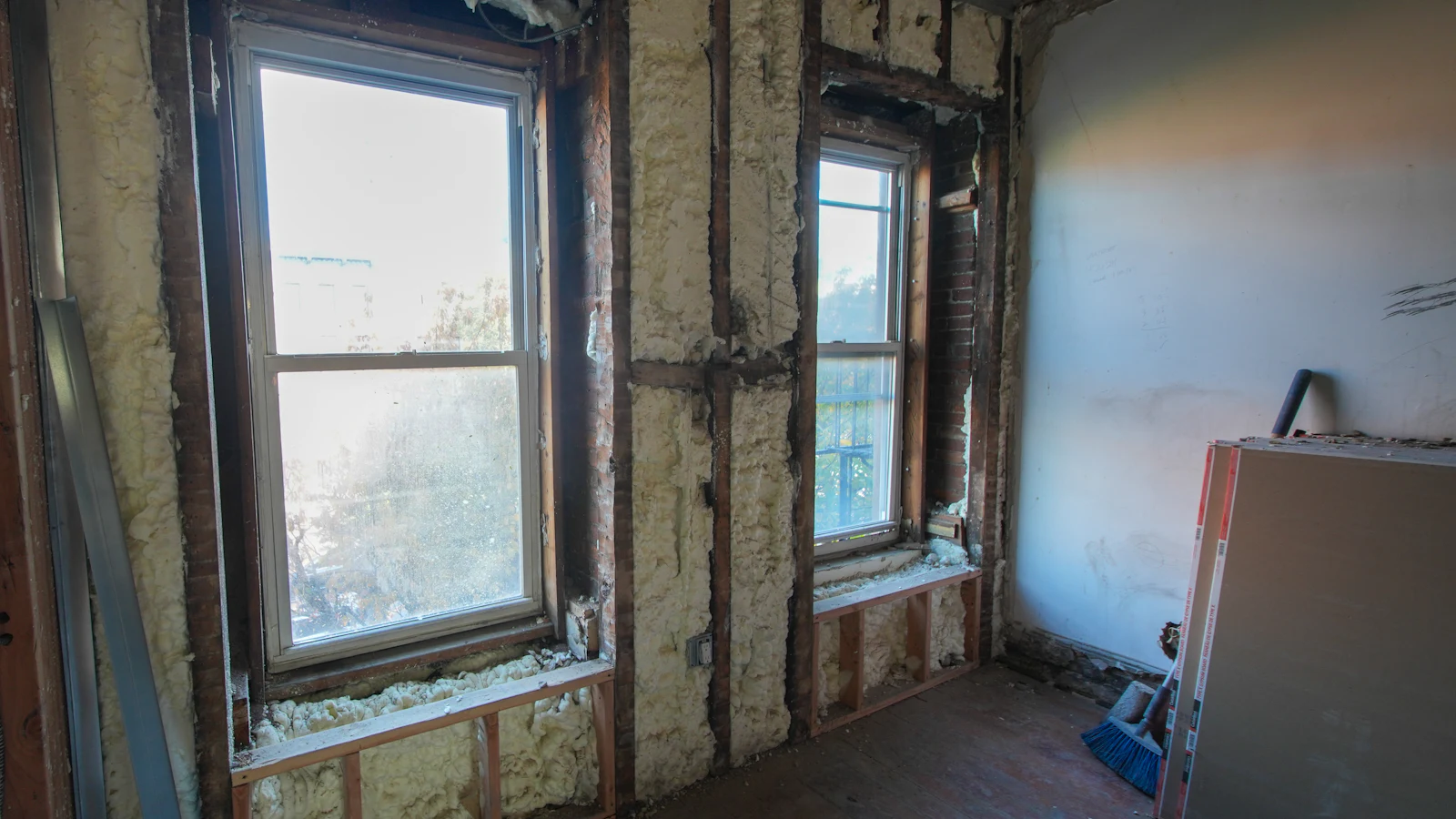
Short answer. Wherever possible, insulate external walls from the outside. Correctly designed external insulation keeps the structural wall warmer and generally reduces the risk of interstitial condensation, and the insulation also covers floor edges and other thermal bridges. Internal insulation is for exceptional cases where the facade cannot or must not change. It then needs especially careful design — a suitable system, tight vapour control and well-thought-out junctions — or moisture can build up behind the insulation and mould can follow.
Key points
- The dew point is not a permanently fixed location inside a wall; it describes the temperature and humidity conditions at which water vapour can condense. Correctly designed external insulation generally reduces the condensation risk in the wall.
- Internal insulation makes the wall colder and raises the moisture risk inside it.
- Thermal bridges are spots with higher heat loss: edges of floors and balcony slabs, window reveals, the plinth, the roof-to-wall junction.
- Mould usually grows where humid air meets a cold surface — so insulation, indoor humidity and ventilation have to be dealt with together.
- For older timber and brick houses, choose materials that let the wall dry out.
What the dew point is and why it matters
The dew point is not a permanently fixed location inside a wall; it describes the temperature and humidity conditions at which water vapour can condense. In winter, indoor air is warmer and more humid than outdoor air, so water vapour moves outwards through the wall. The temperature drops gradually across the wall. Where it gets low enough, the vapour can condense. If that happens in the insulation or in the wall itself and the moisture cannot dry out, the wall stays damp, insulates less well, and timber and finishes can deteriorate.
Correctly designed external insulation keeps the structural wall warmer and generally reduces the risk of interstitial condensation. The actual moisture behaviour depends on the wall build-up, indoor humidity, ventilation and a hygrothermal assessment. With internal insulation, the wall behind the insulation gets colder — which is why this option needs a calculation and precise workmanship.
Outside or inside: a comparison
| External | Internal | |
|---|---|---|
| When it is chosen | Most private houses, where the facade may change | The facade is protected or cannot change; a single room is insulated |
| Wall temperature | The wall stays warmer | The wall gets colder |
| Thermal bridges | Floor edges are covered | Junctions with floors, internal walls and windows stay exposed |
| Moisture risk | Generally lower with a properly designed and installed system | Higher; needs vapour control or a dedicated system and a calculation |
| Room size | Unchanged | Reduced |
| Documents and appearance | The facade changes; a notification and colour scheme may be needed | The facade is unchanged; the scope of work decides the documents |
Materials, systems and what goes into a facade insulation estimate are covered in Facade Insulation Costs, Materials and Common Mistakes.
Thermal bridges: where they form
- Edges of floor and balcony slabs that reach the facade.
- Window and door reveals, especially where the window sits out of line with the insulation layer or the reveal is not insulated.
- The plinth and foundations — the wall-to-foundation junction, if the insulation stops above ground. More on this in our article on foundation waterproofing and plinth insulation.
- The roof-to-wall junction — where wall and roof insulation do not meet.
- Metal fixings and brackets passing through the insulation.
- Junctions of internal walls and floors with the external wall when insulating from inside.
In winter these spots are colder than the rest of the wall. When indoor humidity is high, that is where condensation and mould appear first — in corners, near the ceiling, behind furniture and around windows.
Mould on walls or in corners, and not sure how to insulate? Describe your house in a request — RigaBuild can assess the walls and junctions and propose a solution.
Mould: causes and what to do
Mould needs moisture. In homes it most often appears when indoor air is humid (drying laundry, bathrooms, cooking, many occupants) and a surface is cold. A typical case: windows are replaced with airtight ones but ventilation is not improved — air exchange drops and moisture condenses in the coldest places.
- Find out where the mould is and when it appears: a thermal bridge, a leak, rising damp from the foundations or simply over-humid air.
- Remove the source of moisture: leaks, failed waterproofing, gutters.
- Sort out ventilation and indoor humidity.
- Only then clean and restore the surfaces. Painting over mould without fixing the cause just hides the problem.
- If the mould is extensive or timber is damaged, bring in a specialist.
Older timber and brick houses
Older houses often have walls made of materials that absorb and release moisture: timber, brick, lime plaster. Seal them with a vapour-tight layer on the wrong side and the wall can no longer dry out. So for these houses, vapour-open solutions or systems designed for internal insulation are chosen, and moisture sources are dealt with first: a damaged roof, gutters and rising damp from the foundations. If the building is a cultural monument or in a protected area, there are extra requirements for changes to the facade.
Do you need documents to insulate?
Clause 7.1 6 of the Latvian Building Regulations for buildings (Ēku būvnoteikumi, Cabinet Regulation No. 529) requires a construction notification for renovating or altering a Group 2 residential building with one or two dwellings without changing its volume or use (except cultural monuments). If the colour or appearance of the facade changes, the municipality may ask for a colour scheme, and in apartment buildings the owners must decide. Check your own case with the local building authority (būvvalde) or in BIS.
Common mistakes
- Insulating from inside with a randomly chosen material, without a moisture calculation or vapour control.
- Leaving floor edges, the plinth or window reveals uninsulated.
- Replacing windows and insulating, but not improving ventilation.
- Painting over mould without finding the source of moisture.
- Sealing old timber or brick walls with a vapour-tight layer on the wrong side.
- Insulating a wall that is damp from the foundations or from leaks.
Checklist before you decide
- Wall build-up and material, and whether the wall is dry.
- Can the facade change (protected area, cultural monument, apartment building)?
- Where the thermal bridges are: floors, balconies, windows, plinth, roof junction.
- How rooms will be ventilated after insulation and window replacement.
- Whether internal insulation has a calculation and a suitable system.
- Which documents are needed.
Frequently asked questions
Is internal insulation always a mistake? No. It is acceptable when the outside cannot be insulated, but it needs a calculation, a suitable system and careful detailing at junctions.
Why did mould appear after new windows were fitted? New windows are more airtight, so natural air exchange drops. Without better ventilation, moisture condenses in the coldest places, such as around windows and in corners.
Can thermal bridges be fixed from inside? Partly. Many of them, such as floor edges and the plinth, are covered far more effectively by external insulation.
How can I find thermal bridges? A thermal imaging survey in cold weather, when the indoor–outdoor temperature difference is large, shows them well. Cold corners, condensation and mould spots are also signs.
Sources
- Cabinet Regulation No. 529 “Ēku būvnoteikumi” (Building Regulations for Buildings) — clause 7.1 6; version 01.10.2026–07.01.2027, wording unchanged in the versions from 08.01.2027 and 01.03.2027; checked 08.11.2026
- Construction Information System (BIS) — State Construction Control Bureau; checked 08.11.2026
Planning to insulate your house? See our building insulation and facade works services or request a quote — we will propose a solution after assessing the walls and junctions.
Prepared by the RigaBuild editorial team. Regulations checked on 8 November 2026. This article is for information only and does not replace advice from a designer or the building authority.