Contents
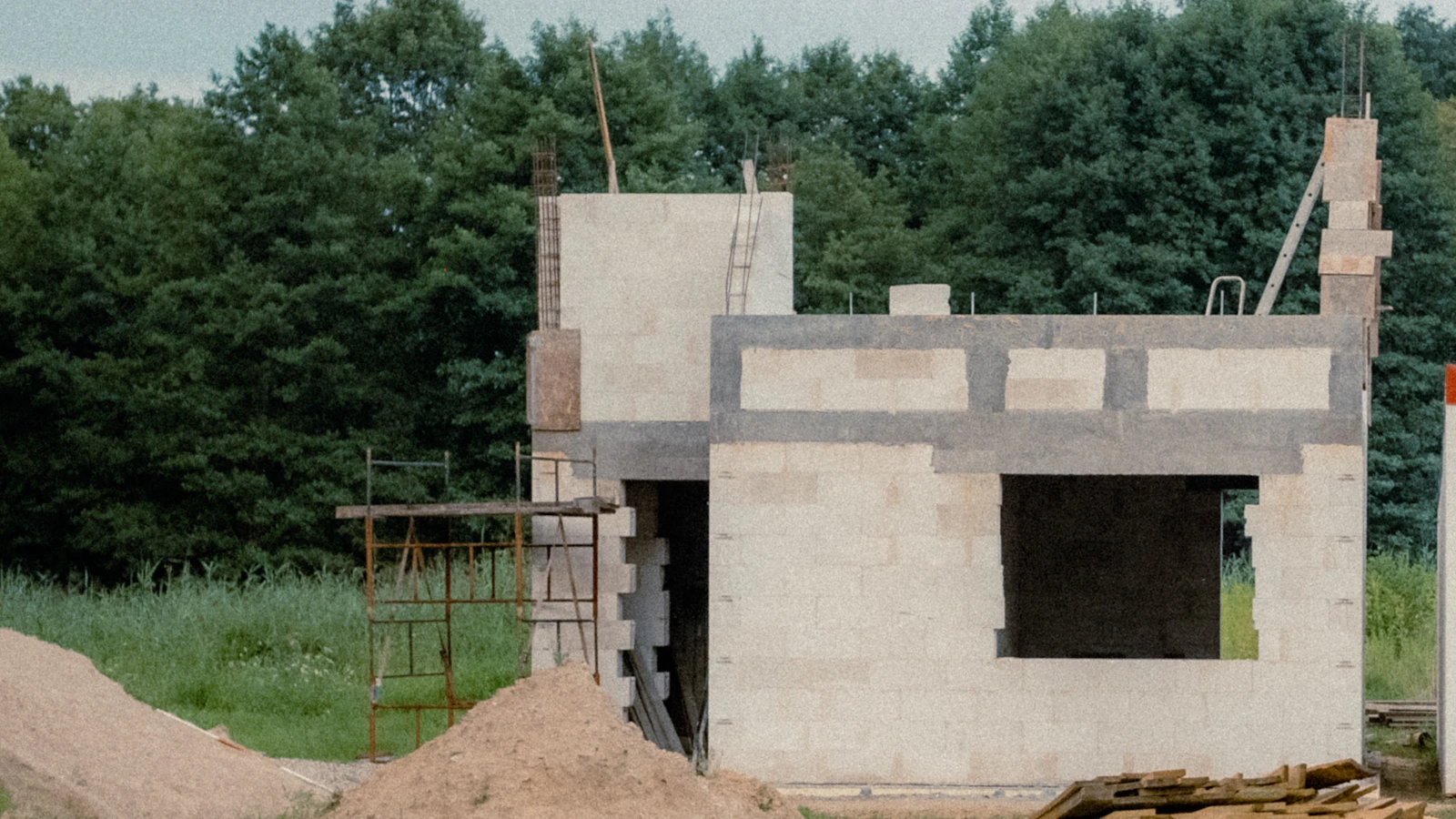
Short answer. Choose a house builder on three counts: whether the company is allowed and able to carry out your works, whether its quotation covers the same scope as the other bidders’, and whether the contract clearly sets out the scope boundaries, programme, payments and warranty. Before you negotiate, check the company in the Register of Construction Merchants in BIS (Latvia’s Construction Information System), find out who will be the responsible site manager, and ask to see finished projects. Compare quotations only if they are based on the same drawings and specification.
Key points
- Only a business registered in the Register of Construction Merchants may provide construction services, and the contractor must carry civil liability insurance.
- “Turnkey” is not a legal term — what it covers has to be written into the contract and the quotation.
- It is safer to tie payments to completed and accepted stages than to calendar dates.
- The Building Regulations set a minimum works warranty of three years for second-group buildings from the acceptance certificate; the contract can agree a longer period.
- The cheapest quotation is often the one with items missing.
Delivery models: how a house can be built
| Model | How it works | Suits | Main risk |
|---|---|---|---|
| General contractor | One contract and one responsible party for all agreed stages; the company coordinates its own and its subcontractors’ work | Clients who want one point of contact and clear responsibility for sequencing | Vague boundaries in the contract — what is in and what is out |
| Separate contractors per stage | Foundations, frame, roof, services and finishes are done by different firms under separate contracts | Clients with the time and experience to coordinate | Responsibility “between stages” — who is liable when the next stage reveals a defect in the previous one |
| Self-build as the builder | A private individual building on their own land may build a one- or two-dwelling house of up to 400 m², taking on the contractor’s duties | People with experience and time; individual works can still be contracted out | All responsibility and paperwork rests with you |
If you have not yet chosen the approval route, start with Building Permit for a Private House in Latvia — it determines which documents your builder will have to keep.
What to check before you negotiate
- Register of Construction Merchants. The Construction Law requires a business providing construction services to register in the Register of Construction Merchants (būvkomersantu reģistrs). The register is public in BIS (bis.gov.lv).
- Responsible site manager. Find out who will run your site and check their practice rights in the register of construction specialists in BIS.
- Insurance. The contractor (būvdarbu veicējs — the party legally responsible for the works) must insure its civil liability, and the permit issuer checks this before works start. Ask for confirmation of the policy.
- Finished projects. Visit at least one completed house and one under construction and, if possible, talk to the client.
- Own teams or subcontractors. Ask which stages the company does itself, which it subcontracts and how responsibility is managed.
- Communication. Who answers your questions, how often the site is inspected and how changes are recorded. If you live abroad, agree on reporting with photos and regular updates.
How to compare quotations
Quotations are only comparable if every bidder prices the same drawings, materials specification and scope boundaries. Check that each one has separate items for earthworks, foundations, structure, roof, windows and doors, facade, building services and finishes, and what is listed as “excluded”. If one quotation is much lower, look for missing items first. A price per m² is only a guide; what makes up the final figure is explained in How Much Does It Cost to Build a Private House in Latvia?
“Turnkey”: what usually needs clarifying
“Turnkey” (zem atslēgas) is not defined in Latvian legislation, and builders use it for different scopes. List the specific items in the contract, especially those that often sit outside the price:
| Item | Question for the contract |
|---|---|
| Design and BIS documents | Who prepares and submits them; is this in the price |
| Utility connections and external networks | Who pays the operators’ connection fees and the networks from the boundary to the house |
| Interior finishes | Which level: shell (grey), white-box or full finish; which materials |
| Sanitaryware, kitchen, built-in furniture | Included or not; who chooses and buys |
| External works | Driveway, fence, landscaping |
| Surveys and documents for putting into service | As-built survey, temporary energy performance certificate, utility statements |
What to put in the contract
- Scope and boundaries — the quotation, drawings and materials specification as annexes.
- Programme — the overall period and a stage schedule, plus what happens if weather or client decisions affect it.
- Payments — linked to completed and accepted stages, with a clear basis for each payment.
- Change procedure — any extra work or change is agreed in writing before it is done, with its price and time impact. See How to Agree Extra Work in Writing.
- Concealed works — foundation reinforcement, waterproofing, insulation and services are inspected and photographed before they are covered.
- Documentation — who keeps the construction log and the as-built documentation needed to put the house into service.
- Warranty — its length, start date and the defect procedure. The Building Regulations set a minimum works warranty after the acceptance certificate of three years for second-group buildings and five years for third-group buildings.
- Acceptance — how stages and the whole house are accepted and how defects are recorded.
Want to compare offers on the same scope? Send your design documents to RigaBuild and we will prepare a quotation with clear scope boundaries and a stage sequence.
Warning signs
- The company is not in the Register of Construction Merchants or cannot name a responsible site manager.
- The quotation is a single sum, or full of items priced “as incurred”.
- A large share of the price is demanded upfront without any link to ordering materials.
- An offer to start before BIS shows the conditions for starting works as met.
- Refusal to record changes in writing or to sign off concealed works.
If you are planning a renovation rather than a new house, How to Choose a Renovation Contractor in Riga will be more useful.
How RigaBuild works
For private houses, RigaBuild builds up the scope from the available design documents: we first review the drawings and technical solutions, then agree the stages, materials and boundaries of responsibility, and only then prepare the estimate and sequence of works. The agreed works, each party’s responsibilities and the warranty terms are fixed in the contract, and each project has a responsible project manager.
Frequently asked questions
How do I check that a builder is registered? The Register of Construction Merchants is public in BIS (bis.gov.lv), where you can also see construction specialists’ practice rights.
General contractor or separate trades — which is cheaper? Separate contracts can look cheaper, but coordination, scheduling and responsibility between stages then fall to you. Compare total cost and risk, not just the quotation figure.
How much should I pay upfront? Latvian legislation does not set a deposit amount. It is safer to tie payments to completed and accepted stages and agree materials purchasing separately.
What is the minimum warranty on a new house? The Building Regulations set a minimum works warranty of three years for second-group buildings from the acceptance certificate. It does not cover normal wear or improper use.
What does a turnkey house include? There is no single definition. The contract and quotation decide, so check the items for design, connections, finishes, equipment and external works.
Sources
- Construction Law (Būvniecības likums) (Art. 19.1, 20, 22) — likumi.lv; checked 08.11.2026
- Cabinet Regulation No. 529 “Ēku būvnoteikumi” (Building Regulations) (point 176) — likumi.lv; checked 08.11.2026
- Construction Information System — registers of construction merchants and specialists; checked 08.11.2026
RigaBuild’s process — Private House Construction and How We Work (checked 08.11.2026).
Looking for a builder for your house? See private house construction and full-cycle construction, or request a quote based on your design documents.
Prepared by the RigaBuild editorial team. Legislation and sources checked on 8 November 2026. This article is for information only and does not replace legal advice; the specific terms are set by the contract.