Contents
- Why the plot must be checked before you buy
- 1. Spatial plan and building regulations
- 2. Encumbrances, protection zones and protected areas
- 3. Ownership and the Land Register
- 4. Access to the plot
- 5. Electricity, water and drainage
- 6. Soil, levels and groundwater
- 7. If the buyer is a foreign national
- Checklist before paying a deposit
- Common mistakes
- Frequently asked questions
- Sources
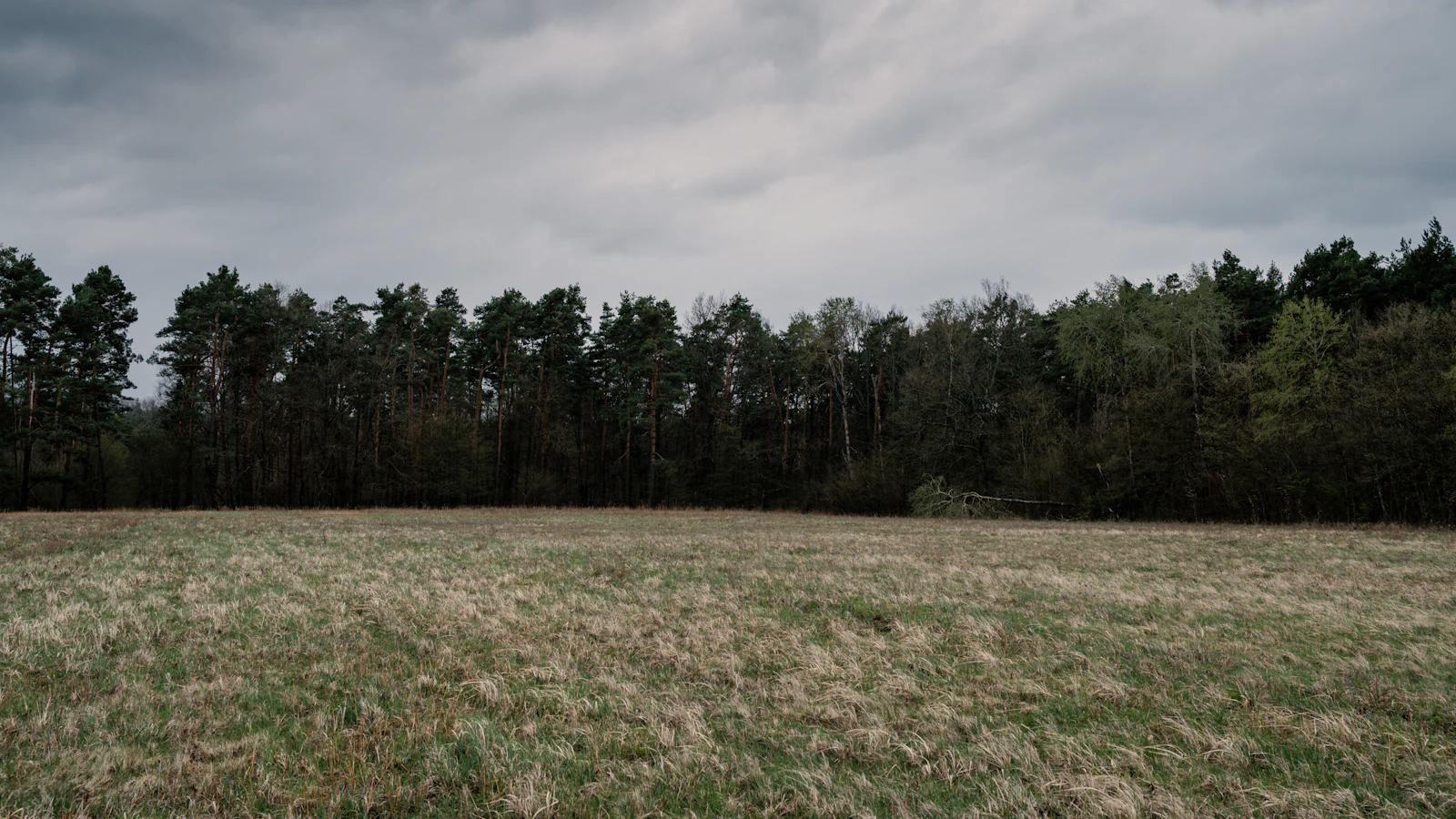
Short answer. Before you buy a plot for a private house in Latvia, check five things: what the municipal spatial plan and building regulations allow, which encumbrances and protection zones affect the land, whether access is legally secured, how electricity, water and drainage will be connected, and what the ground is like. Core information is available through public information systems — the national geoportal, the State Cadastre and the Land Register; some Land Register records and extracts may be subject to a fee. Before signing, go through the findings with the municipality, a notary or lawyer, and a construction professional. If you are a foreign national, check the purchase rules that apply to you first.
Key points
- The permitted land use and building regulations decide whether, and what, you may build — check them before paying a deposit.
- Protection zones and encumbrances can shrink the buildable part of a plot considerably.
- Access over a neighbour’s land without a registered servitude, and a distant electricity connection, are the most common hidden costs.
- Soil and groundwater drive the foundation design and therefore the budget.
- Restrictions or municipal consent requirements apply to some categories of foreign buyers and some types of land.
Why the plot must be checked before you buy
Once the land is yours, many constraints can no longer be changed: the municipality sets the spatial plan, protection zones come from the law, and the neighbour’s land you drive across stays the neighbour’s. If this only surfaces at the design stage, the house may not fit where you wanted it, the foundation may need a more expensive solution, or the electricity connection may require new grid works. That is why checking the plot is the first of the stages of building a house, not paperwork after the purchase.
1. Spatial plan and building regulations
Every Latvian municipality has a spatial plan (teritorijas plānojums) with building regulations. The plans and their maps are published on the national portal Ģeoportāls (geolatvija.lv). Look for:
- the functional zone — whether detached houses are allowed;
- building parameters — density or intensity, maximum number of storeys and height, minimum green area;
- building lines and set-backs from the street and boundaries;
- the minimum plot size, if you intend to subdivide;
- local or detailed plans that may add their own rules for the area.
Also check the registered land use purpose in the Cadastre. Land registered as agricultural or forest land may need a change of use or another procedure before a house can be built. If anything is unclear, ask the municipal building authority (būvvalde — the local office that reviews building applications) or the municipal planner for a written answer about the specific cadastral designation. That is far safer than relying on the words “building land” in an advert.
2. Encumbrances, protection zones and protected areas
Protection zones are areas where the law restricts economic activity to protect natural or engineering objects such as power lines, gas pipes, roads, water bodies and forests. For example, the Protection Zone Law sets a zone of 6.5 metres from the axis of a 20 kV overhead power line outside towns and villages. If such a line crosses the plot, you cannot place the house there.
- Cadastre. kadastrs.lv shows boundaries, area, land use purpose and registered encumbrances.
- Nature. Protected nature areas and protected trees can be checked in the nature data system Ozols.
- Heritage. A nearby cultural monument’s protection zone can affect building; see mantojums.lv.
- Flooding. Near rivers, lakes and the sea, check flood risk areas and any floodplain set in the spatial plan.
3. Ownership and the Land Register
The Land Register (Zemesgrāmata) shows the owner, co-owners, mortgages, prohibitions and servitudes; folio data can be viewed at zemesgramata.lv. Check that the seller is the sole owner, that no entry prevents the sale, and that the area in the Land Register matches the Cadastre and the boundaries on the ground. Have a notary or lawyer handle the transaction documents and the payment arrangement.
4. Access to the plot
The road you can drive along today is not necessarily yours to use. If access crosses a neighbour’s land or a private road, find out whether a road servitude is registered. During construction, heavy vehicles — concrete mixers, lorries with materials, cranes — must reach the site, so check the road’s width, load capacity and turns. Building or reinforcing access is a separate job with its own estimate.
5. Electricity, water and drainage
- Electricity. A new connection is requested from the distribution operator AS “Sadales tīkls” through its customer portal. If no grid works are needed, the operator offers a connection contract; otherwise it issues technical requirements and a building design is needed. The cost depends on the capacity requested and the scope of works — ask for it before you commit.
- Water and sewerage. Find out whether mains networks are nearby and how the local water utility handles connections. Without mains, the answer is a borehole and a local treatment plant, each with its own requirements and costs.
- Surface water and land drainage. Check whether the plot has drainage systems that, if damaged, could also cause problems for neighbours.
6. Soil, levels and groundwater
The ground determines the foundation. Peat, soft clay, a high water table or buried construction waste can mean deeper or more complex foundations, drainage and more earthworks. Only a geotechnical survey gives reliable data: an indicative assessment is enough before buying, but a full survey is done before design. How ground conditions affect the choice between strip, slab and pile foundations is explained in Strip, Slab or Pile Foundations, and the main estimate items in Private House Foundation Costs.
Comparing several plots? Describe them in an enquiry and RigaBuild can discuss the construction side: access for machinery, the foundation approach and the order of works.
7. If the buyer is a foreign national
Restrictions or municipal consent requirements apply to some categories of foreign buyers and some types of land. The rules depend on the buyer’s status, the location and the use of the land. In towns, land acquisition is governed by the law “Par zemes reformu Latvijas Republikas pilsētās” (land reform in cities), and in rural areas by “Par zemes privatizāciju lauku apvidos” (land privatisation in rural areas). Have a notary or lawyer check the specific transaction before signing.
Checklist before paying a deposit
| What to check | Where | What it means for the house |
|---|---|---|
| Functional zone, building parameters, building lines | Ģeoportāls (TAPIS), municipality | Whether a house is allowed and how large |
| Land use purpose, boundaries, encumbrances | Cadastre | Whether a change of use is needed; how much land is buildable |
| Owner, mortgages, prohibitions, servitudes | Land Register, notary | Whether the purchase is safe and access secured |
| Protection zones, nature and heritage | Cadastre, Ozols, mantojums.lv, municipality | Where the house cannot go |
| Electricity, water, sewerage | “Sadales tīkls”, water utility | Feasibility, timing and cost of connections |
| Soil, groundwater, levels, flooding | Geotechnical engineer, flood risk data | Foundation type and earthworks |
| Buyer status | Notary or lawyer | Whether municipal consent is needed |
Common mistakes
- Trusting “building land” in an advert without checking the plan and land use purpose.
- Paying a deposit before confirming that access is secured by a servitude.
- Assuming electricity is “at the boundary” without asking the operator.
- Judging the ground only by the neighbouring houses.
- Placing the house on paper without allowing for protection zones.
Once you have chosen the plot, the next step is choosing the approval route — see Building Permit for a Private House in Latvia. To understand the budget structure, read How Much Does It Cost to Build a Private House in Latvia?
Frequently asked questions
Can I build a house on any land? No. The spatial plan, land use purpose, encumbrances and protection zones decide. Check the specific cadastral designation before buying.
Can foreigners buy land in Latvia to build a house? It depends on the buyer’s status, the location and the use of the land. Restrictions or municipal consent requirements apply to some categories of foreign buyers and some types of land, so have a notary or lawyer check the specific transaction before signing.
Where can I see what the spatial plan allows? Municipal spatial plans and building regulations are published on Ģeoportāls (geolatvija.lv). Clarify anything uncertain with the municipality.
Do I need a geotechnical survey before buying? A full survey is usually done before design. Before buying, at least an indicative assessment is useful, especially on wet, peaty or filled ground.
How much does an electricity connection for a new house cost? It depends on the capacity and on whether grid works are needed. “Sadales tīkls” provides the information for a specific plot.
Sources
- Protection Zone Law (Aizsargjoslu likums) — Saeima (likumi.lv); checked 08.11.2026
- Law “Par zemes reformu Latvijas Republikas pilsētās” — Saeima (likumi.lv); checked 08.11.2026
- Law “Par zemes privatizāciju lauku apvidos” — Saeima (likumi.lv); checked 08.11.2026
- Ģeoportāls — spatial plans; State Cadastre (VZD); Land Register; checked 08.11.2026
- AS “Sadales tīkls” — new permanent connection; checked 08.11.2026
Planning to build a private house? See our private house construction and foundation construction services or request a quote — we prepare the scope and estimate from the design documents and an assessment of the site.
Prepared by the RigaBuild editorial team. Legislation and sources checked on 8 November 2026. This article is for information only and does not replace legal advice or an answer from the municipality or building authority.