Contents
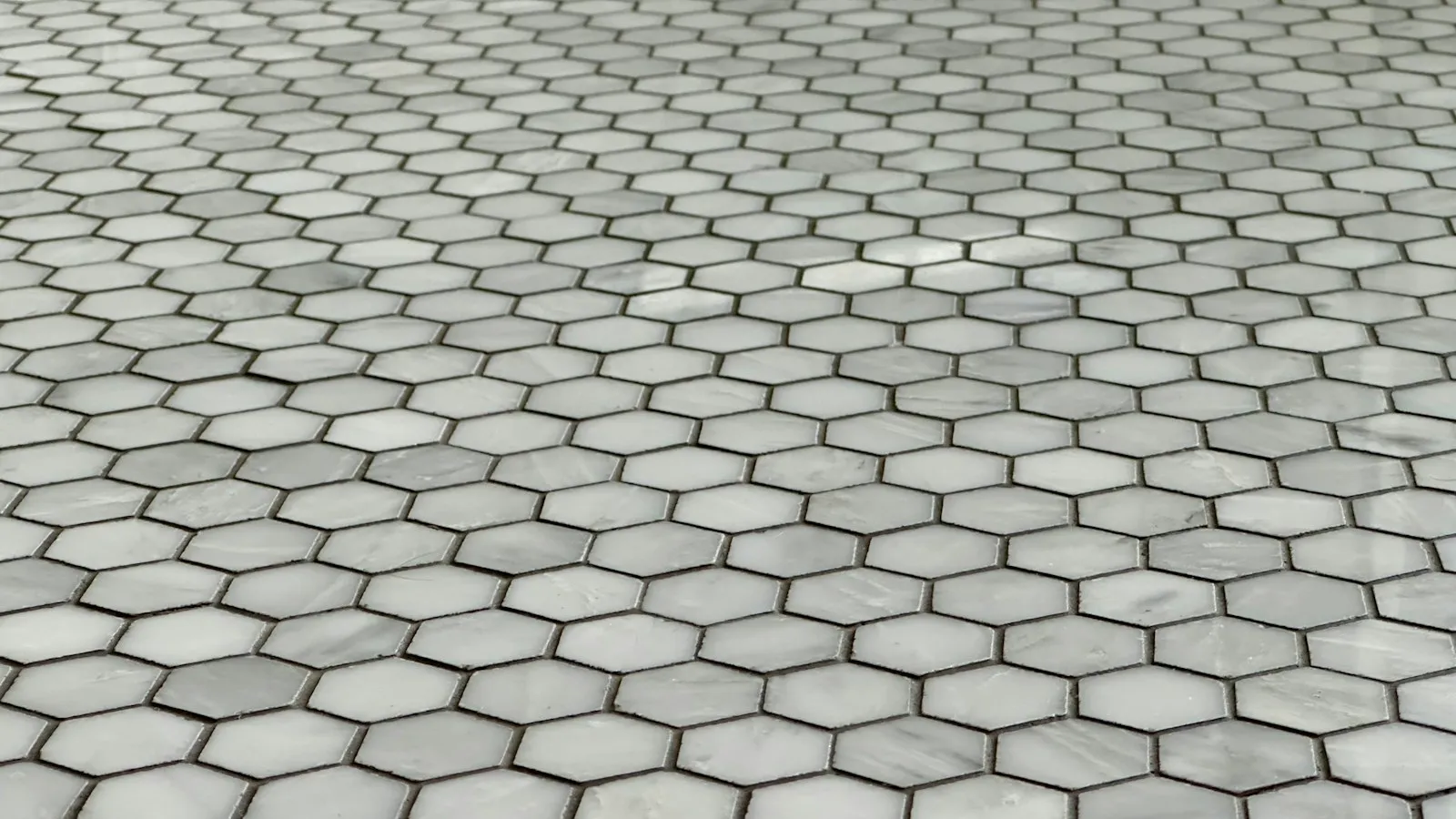
Short answer. The price of tiling per m² depends not only on the area but on the tile format, the condition of the substrate, whether waterproofing is needed, the layout and the amount of cutting. Large-format tiles, mosaics, diagonals or lots of corners and niches add to the work. RigaBuild’s indicative starting price for tiling works is from €35/m² (valid on 30 October 2026, excluding VAT, labour only). Materials are a separate part of the estimate, and substrate preparation is assessed separately and added to the estimate if needed.
Key points
- Tiles are only as good as the substrate: it must be flat, stable and dry.
- Wet areas need waterproofing before tiling, with reinforcement at corners and pipe entries.
- A layout plan before work starts sets where the cuts go and how the joints line up.
- Compare estimates line by line: preparation, waterproofing, laying, grouting, trims.
What makes up the price of tiling
| Factor | How it affects the work | What to check in the estimate |
|---|---|---|
| Tile format | Mosaics and large formats need more time, precision and tools | Whether the price applies to your format |
| Substrate | Unevenness, old tiles or damaged plaster need preparation | Whether levelling is a separate line |
| Waterproofing | A required part of the system in wet areas | Area, reinforcement, material |
| Layout | Diagonal, herringbone or patterns increase cutting | Pattern and starting lines |
| Corners and niches | External corners, niches, borders and trims | Lines for trims or 45° mitred edges |
| Joints | Cement or epoxy grout, joint width | Grout material and colour |
| Removal | Taking up old tiles and disposing of waste | Whether removal is included |
How to compare an estimate line by line is shown in apartment renovation costs in Riga.
Preparing the substrate
Before tiling, the substrate is checked with a straightedge and level. Walls can be plaster or cement or gypsum boards suitable for the area; floors need a stable screed or concrete. Tiling over old tiles is sometimes possible if they are firmly bonded and the system manufacturer allows it, but it raises the level and needs a special primer. Timber substrates move, so they need extra preparation or a different solution. In older flats the floor substrate can be unpredictable — see renovating floors in an older apartment.
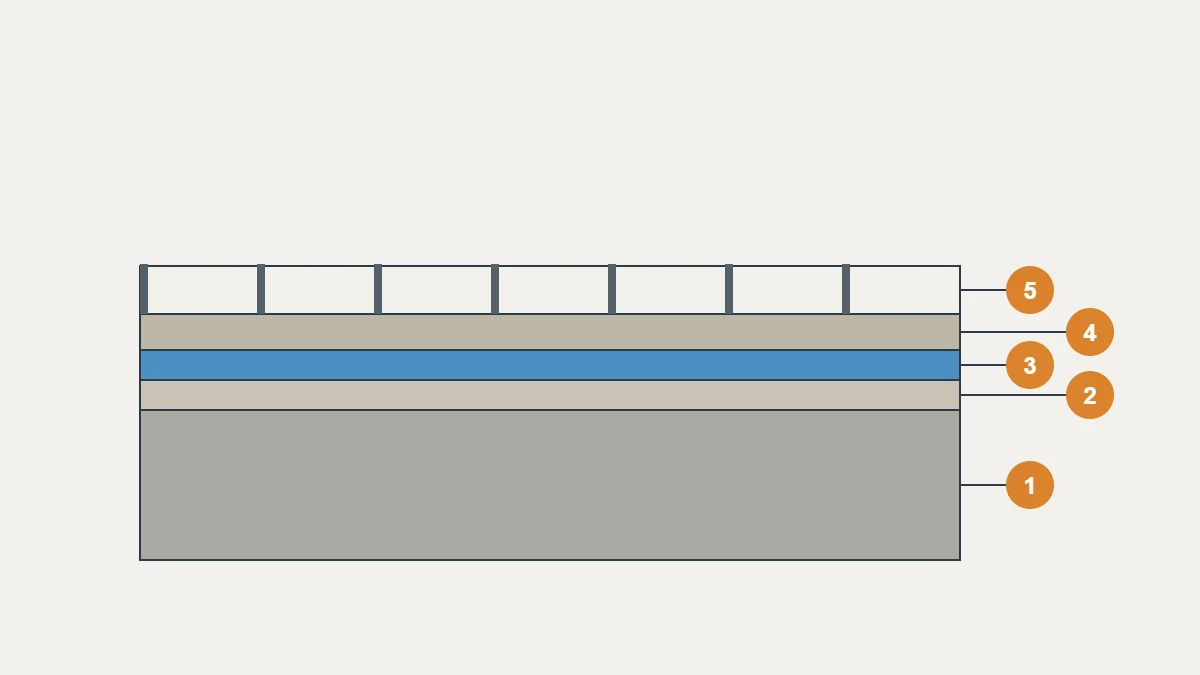
The diagram shows the layers of a tiled surface: 1 — substrate, 2 — primer, 3 — waterproofing, 4 — tile adhesive, 5 — tiles and joints. In wet areas, waterproofing is a required part of the system.
Waterproofing in wet areas
In bathrooms, showers and other wet areas, waterproofing goes on before the tiles, with reinforcing tape at corners, the drain and pipe entries. Tiles and grout on their own are not watertight. Waterproofing materials have drying times that cannot be shortened. The order of a bathroom renovation and the logic of the fall towards the drain are covered in bathroom renovation sequence and cost.
Layout, joints and cuts
A good tiler starts with a layout plan: where the starting line is, where the cuts go, and how joints line up with openings and fittings. That decides both the look and the amount of material. Large-format tiles need a very flat substrate and full adhesive coverage, otherwise voids remain under the tile. Joint width and material are chosen to suit the tile, the room and the manufacturer’s guidance.
Floors, walls and underfloor heating
Floor tiles have to work with other floor coverings in the flat: transitions and levels at doorways should be planned in advance. Coverings and transitions are compared in flooring installation costs. If there is underfloor heating, the adhesive and grout must be compatible with it, and the system is started up before tiling according to the manufacturer’s instructions.
Order of works and timing
- Inspection and measuring, choosing tiles and format.
- Layout plan and material quantities with an allowance.
- Removal and substrate preparation.
- Priming and, in wet areas, waterproofing.
- Laying the tiles to the plan.
- Grouting, trims and silicone joints.
- Inspection and handover.
Timing depends on area, format and drying times: levelling layers, waterproofing, adhesive and grout all need time before the next step. Materials can be bought by the client or by RigaBuild; RigaBuild can offer better prices through trade discounts, but that does not mean every tile will always be cheaper than in a shop. See who buys renovation materials for more.
Common mistakes
- Tiling on an uneven or unstable substrate.
- Skipping waterproofing or corner reinforcement.
- Buying tiles without a cutting allowance or from different batches.
- Starting without a layout plan and ending up with thin cuts in plain view.
- Rushing drying times.
Checklist before asking for a quote
- □ Room size and the area to be tiled.
- □ Tile format and laying pattern.
- □ Existing substrate and whether old tiles must come off.
- □ Wet areas and drain position.
- □ Underfloor heating.
- □ Who buys the tiles and ancillary materials.
Frequently asked questions
Is substrate preparation included in the tiling price?
The need for preparation is assessed separately and added to the agreed scope if it is required.
Why does large-format tiling cost more?
It needs a flatter substrate, more careful adhesive coverage, more precision and often two people to lay one tile.
Is waterproofing mandatory in a bathroom?
In wet areas the substrate and waterproofing must be prepared before tiling, in line with the intended build-up.
Can you tile just a kitchen splashback?
Yes, a small separate area can be assessed as a job on its own if the substrate is properly prepared.
You can get a rough figure in the renovation calculator and an exact estimate by sending us details of the room. For the services, see tiling works, bathroom renovation and kitchen renovation.
Prepared by the RigaBuild editorial team. Prices and sources checked on 30 October 2026. This article is for information only and does not replace advice from a designer, the building board (būvvalde) or a lawyer.